



Files
Download Full Text (501 KB)
Abstract
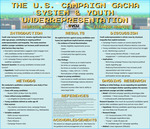
This research investigates why young people remain underrepresented in elected U.S. offices and why youth voter turnout has historically remained low. Motivated by persistent shortcomings in U.S. youth turnout, the dominance of older elected officials, and recent high-profile victories by young mayoral candidates, this study asks whether young candidates (< 40) increase youth voter turnout in U.S. elections—and, if so, whether structural factors prevent these candidates from winning. Existing literature on descriptive representation and electoral inequality suggests that young candidates may energize youth voters yet face systemic disadvantages that hinder their success. This research contributes to the literature by exploring how the U.S. campaign finance system shapes young candidates’ electoral viability. Using a qualitative comparative case study design, we analyzed four large U.S. mayoral elections: two with victorious young candidates (Boston 2021; New York City 2025) and two where no candidate under 40 appeared on recent ballots (Los Angeles and Columbus). For each city, candidate eligibility rules, ballot requirements, party bylaws, primary election methods, and campaign finance laws were examined using publicly available legal and institutional documents. This approach allowed us to identify structural barriers while remaining open to unanticipated patterns across cases. Our findings reveal no explicit legal or party rules that impede young candidates. Instead, obstacles lie implicitly in the U.S. campaign finance system’s lack of limits on contributions, candidate spending, and the normalization of high-cost campaigning. These conditions allow older candidates—who are more likely to possess greater financial resources—to outcompete younger challengers, limiting youth descriptive representation and alienating youth from electoral politics. We conclude that youth underrepresentation is sustained less by overt legal barriers than by embedded systemic inequalities in campaign finance, an issue with broader implications for electoral integrity, representative democracy, and youth voter turnout in the United States.
Publication Date
2026
Subject Major(s)
Political Science
Keywords
Political Science, American Electoral Politics, Gerontocracy, Youth Underrepresentation, Money in Politics
Disciplines
American Politics | Political Science
Current Academic Year
Senior
Faculty Advisor/Mentor
Alex Keena
Rights
© The Author(s)
Recommended Citation
Burrows, R., & Harris, E. (2026). The U.S. Campaign Gacha System and Youth Underrepresentation