



Files
Abstract
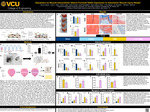
Volumetric muscle loss (VML) has been found to overwhelm muscle regeneration, resulting in loss of long-term muscle function and increased risk of injury to individuals with age-associated diseases. Current treatment plans result in suboptimal recovery; however, decellularized muscle matrices (DMMs) have been found to provide an effective environment for muscle regeneration via muscle-specific growth factors. These factors limit scarring, enabling these DMMs to guide progenitor cells toward effective tissue regeneration. However, factors such as age may affect DMM’s regenerative capacity, and must be considered when developing these technologies. Advanced glycation end-products (AGEs) are chemical cross-links that contribute to the aging process and are implicated in receptor for advanced glycation end-product (RAGE) activity. In this study, we developed a model of aged rat DMMs by using AGE cross-links and hypothesized that increased AGE levels in DMM would reduce its regenerative capacity.
Publication Date
2023
Accessibility Note
Content is digitally accessible 2026
Subject Major(s)
Biomedical Engineering
Keywords
Volumetric muscle loss (VML), Muscle regeneration, Decellularized muscle matrices (DMMs), Advanced glycation end-products (AGE), Receptor for advanced glycation end-product (RAGE)
Current Academic Year
Senior
Faculty Advisor/Mentor
David Joshua Cohen
Faculty Advisor/Mentor
Zvi Schwartz
Faculty Advisor/Mentor
Michael J. McClure
Sponsorship
Virginia Commonwealth University. Undergraduate Research Opportunities Program
Is Part Of
VCU Undergraduate Research Posters
Rights
© The Author(s)