



Files
Download Full Text (779 KB)
Abstract
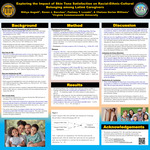
A sense of racial-ethnic-cultural belonging (REC-B) is a key process that supports wellbeing and ethnic-racial identity (ERI) development across the lifespan. Yet, little research has examined how phenotypic characteristics may shape belonging within caregivers. While the impact of skin tone on Latiné families has been examined, understanding caregivers' feelings towards their skin tone is essential due to its potential impact on their identity. The current study aimed to investigate whether skin tone and skin tone satisfaction predicts REC-B within Latiné caregivers. This study contributes to understanding how phenotypic factors shape belonging-related identity processes throughout adulthood.
Participants included 113 Latiné caregivers (93.1% Female; Mage = 35.04, SD = 6.56) from the ongoing STAR (Supporting, Thriving, Ambitious, and Resilient) Children & Families Project, which aims to understand risk and protective factors in Latiné, Black, and Multiracial families and their relation to cultural experiences and developmental outcomes. Families were recruited through community outreach at public events, including local festivals, non-profit organizations, and word-of-mouth. Research assistants administered surveys to both caregivers and children, asking about their ERI-related experiences. Compensation for participation included $50 for the caregiver with an additional $10 and a toy for their child.
Findings indicated that the overall model was significant, F(3, 85) = 2.99, R2 = .10, p = .036. Specifically, Latiné caregivers’ skin tone satisfaction predicted higher levels of REC-B (β = .24, p = .021). When accounting for age as a covariate, Latiné caregivers’ skin tone was not associated with REC-B (β = .19, p = .065). Findings highlight that among Latiné caregivers, those who are more satisfied with their skin tone are more likely to have a stronger sense of belongingness to their ethnic-racial group. Although skin tone remains an important aspect of ERI, this emphasizes the importance of also considering skin tone satisfaction as an important contributor to identity development.
Publication Date
2026
Disciplines
Developmental Psychology
Current Academic Year
Senior
Faculty Advisor/Mentor
Chelsea Derlan Williams
Rights
© The Author(s)
Recommended Citation
Angadi, N., Bacchas, R. J., Lozada, F. T., & Williams, C. D. (2026, April). Exploring the Impact of Skin Tone Satisfaction on Racial-Ethnic-Cultural Belonging among Latiné Caregivers. Poster presented at the National Conference for Undergraduate Research (NCUR), Richmond, VA.