



Files
Download Full Text (250 KB)
Abstract
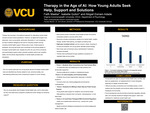
Therapy has long been a foundational approach for addressing mental health, but advances in digital technology have led many young adults, especially Generation Z, to increasingly turn to AI tools for support. Rising costs, limited access to providers, and long wait times have further boosted the appeal of AI-based mental-health solutions. Despite this growing interest, the use of AI for emotional and psychological support raises important questions about trust, empathy, safety, and the ethical responsibilities of mental-health providers and developers. We conducted a brief scoping review of research on AI-based mental-health tools and student help-seeking behaviors. Searches were performed on Google Scholar and publicly accessible academic sources from 2020 to 2025 using keywords related to “AI mental health,” “chatbot therapy,” “student help-seeking,” “Gen Z mental health attitudes,” and “digital counseling tools.” Eight articles met inclusion criteria. A standardized five-sentence template was used to summarize each study, covering the citation, purpose, participants, key findings, and relevance to AI and help-seeking, and themes were identified through qualitative synthesis. The findings highlight four key themes: (1) students value the accessibility and professionalism of AI but ultimately trust human therapists for deeper emotional issues; (2) AI chatbots often lack empathy and may give inappropriate or emotionally unsafe responses; (3) young adults are willing to seek help but prefer human connection for emotional support; and (4) AI could be a helpful addition if improved for emotional safety and regulation. Although AI has the potential to improve accessibility and reduce wait times, students do not view it as a replacement for human therapists, especially when addressing deeper emotional needs. Further research is needed to examine ethical safeguards and the long-term effects of AI-supported mental-health services for Generation Z.
Publication Date
2025
Subject Major(s)
Psychology, Artificial Intelligence
Disciplines
Clinical Psychology | Health Psychology
Current Academic Year
Junior
Faculty Advisor/Mentor
Dr. Erin Brown
Rights
© The Author(s)
Recommended Citation
Maeba, F., Quilon, I., & Adade, A. E. (2026, April). Therapy in the Age of AI: How Young Adults Seek Help, Support, and Solutions. Poster accepted to be presented at the National Conference for Undergraduate Research (NCUR), Richmond VA