



Files
Download Full Text (706 KB)
Abstract
Racial inequality has shaped many aspects of American life, with health care among the most devastatingly affected. Structural racism has long driven disparities in housing, education, employment, the justice system, and, most critically, health care. Environmental racism, food deserts, inadequate medical access, and racial stressors have contributed to worse health outcomes, as seen during COVID-19. Chronic conditions like hypertension, asthma, and heart disease disproportionately affect Black communities, increasing morbidity and mortality.
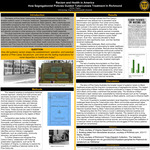
In the early 20th century, these inequities were even starker as tuberculosis ravaged the Black population. While public health measures were implemented, it took decades before sanatoriums were built to accommodate Black patients. Pine Camp Tuberculosis Sanatorium, a segregated Black hospital established in Richmond in 1936, was one such facility, built almost 20 years after the White-only Pine Camp facility and only after the loss of Black domestic workers impacted white households.
Despite its significance, little is known about Pine Camp Tuberculosis Sanatorium’s patients and staff. Our research employed a combination of methods to uncover fragments of its history. We conducted archival research in local and state newspaper archives, which shed light on public attitudes toward Black tuberculosis patients and the broader racial context. Additionally, we reviewed architectural records and conducted comparative studies of other Black hospitals and sanatoriums of the era. Through these methods, we aim to honor and restore dignity to those whose lives have been overlooked.
Publication Date
2026
Subject Major(s)
Anthropology
Keywords
archeology, anthropology, racism in health care, tuberculosis
Current Academic Year
Junior
Faculty Advisor/Mentor
Marie Vergamini
Faculty Advisor/Mentor
Dr. Marie Vergamini
Faculty Advisor/Mentor
Dr. Christopher Brooks
Rights
© The Author(s)
Recommended Citation
McRae, Regina (2025) Racism and Health in America: How segregationist policies guided Tuberculosis Treatment in Virginia