



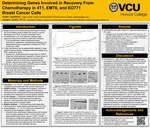
Determining Genes Involved in Recovery From Chemotherapy in 4T1, EMT6, and EO771 Breast Cancer Cells
Files
Download Full Text (511 KB)
Abstract
Breast cancer is one of the most common types of cancer, and often has poor prognosis. Traditional treatments for breast cancer include chemotherapy, which involves a chemical attack on all growing cells within the body. However, these treatments are not 100% effective, and patients might experience recurrence in their cancer months or years after achieving remission. Cancer cells can evade chemotherapy through five mechanisms: senescence, quiescence, cytoprotective autophagy, and apoptosis/necroptosis suppression. Prior studies have conducted CRISPR screens and experiments involving inhibition of epigenetic regulators, to alter the regulation of genes that can contribute to breast cancer chemotherapy resistance. This study aims to expand on the previous studies that have been conducted, to determine the chromatin regulators that are critical to a cancer’s recovery from chemotherapy and that are critical to resistance to chemotherapy in EMT6, 4T1, and EO771 breast cancer cells. Growth of the cancer cells in mice were measured using tumor volume measurements, using caliper measurements every two days to determine width and length of tumors. Tumor measurements were conducted every two days starting on day five after implantation, measuring width and length of the tumors on each side. Western Blots were conducted to confirm that Cas9 was expressed in a doxycycline-dependent manner. The Cas9-positive 4T1 cells successfully developed tumors and grew in the Balb/C mice over the course of the 17-day growth period, without a significant difference in tumor volume from tumors developed from the control 4T1 cells, indicating that the Cas9-positive 4T1 cells are an accurate model of breast cancer in the mice. Due to time constraints, CRISPR knockout experiments were unable to be conducted to determine the effects of knocking out chromatin regulator genes on the growth of tumors and the resistance to chemotherapy, and will be conducted in the future.
Publication Date
2026
Subject Major(s)
Biology
Keywords
Chemotherapy, Treatment Resistance, Breast Cancer, Epigenetics, Chromatin
Current Academic Year
Senior
Faculty Advisor/Mentor
Joseph Landry, Ph.D.
Rights
© The Author(s)
Disciplines
Animals | Cancer Biology | Cell Biology | Molecular Genetics
Downloaded from
Jagdeesh, Akash and Landry, Joseph Ph.D., "Determining Genes Involved in Recovery From Chemotherapy in 4T1, EMT6, and EO771 Breast Cancer Cells" (2026). UROP Posters. Poster 505.
https://scholarscompass.vcu.edu/uresposters/505
Included in
Animals Commons, Cancer Biology Commons, Cell Biology Commons, Molecular Genetics Commons