



























-
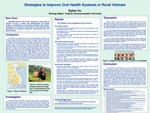
Strategies to Improve Oral Health Systems in Rural Vietnam
Dylan Vu
Oral health care systems seek to prevent and treat problems related to the mouth as well as restore teeth and the tissues that support the teeth. Oral health is important because it is closely related to general health and affects quality of life, food consumption, and physical appearance (Uetani et al., 2006). Poor, rural areas of the world especially do not have the oral health care system to keep up with the worsening oral health statuses of their people due to a lack of resources and/or infrastructure (Kandelman et al., 2012). Such is the case of Vietnam, where according to the National Oral Health Survey of Vietnam from 2001 and data from the World Health Organization, “large parts of the population of Vietnam must have incomplete natural dentitions” due to a high number of extractions and the average number of dental caries (cavities) is higher than the global average (Bhide et al., 2008; Nguyen et al., 2010, p.1). Rural areas of Vietnam are vulnerable because dental decay is prevalent but access to dental professionals is limited. While the oral health of individuals goes untreated, pain increases and quality of life deteriorates. This paper sought to create a plan for improving the oral health care system in rural Vietnam by analyzing a range of previously performed studies. The studies offered different perspectives and suggestions, which were then evaluated and compared to inspire new oral health strategies. One article provided a historical overview of Vietnam’s health care system as it transitioned from a planned to market economy, and another discussed health care issues that rural areas of Vietnam currently have. Multiple studies investigated the oral health status of Vietnamese people and two others analyzed the effectiveness of national health programs in rural areas. Moreover, several studies gave a general overview on oral health care systems and how to improve them. Results of the investigation reveal that although there are not many resources in rural areas of Vietnam to have a robust and sophisticated oral health system, a combination of preventive, structural, and curative strategies can help improve oral health in rural Vietnam. For example, preventive strategies include promoting school education programs and fluoridation treatment. Structural strategies offer changes to how the oral health system is organized, such as creating regional and local plans or using general health care workers to perform oral health tasks. Curative strategies include trying to restore teeth to a functional state instead of extracting them and emphasizing the importance of anterior teeth. Most importantly, the plan should be cost-effective and suit local priorities. Once an improved model is developed in rural Vietnam, it can be used as a model to improve oral health in poor areas around the world.
-
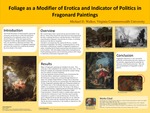
Foliage as a Modifier of Erotica and Indicator of Politics in Fragonard Paintings
Michael Walker
The French Revolution invoked prejudice against the aristocracy and the Rococo works they purchased, including those by eighteenth century artist Jean-Honoré Fragonard whose compositions display erotic subject matter, fluid brushwork, and preference for the natural world. Today that stigma persists; Fragonard’s works, though included in authoritative texts, are described as superficial and banal. This study examines a collection of four of Fragonard’s paintings and, through consideration of over twenty-one expertly written texts, shows that painted flora symbolically modifies the erotic themes of his works. Flowers, trees, and shrubs recontextualize erotic imagery, suggesting that Fragonard’s paintings contain conceits about the French aristocracy. This study calls for a reconsideration of Fragonard’s work in general.
-

Mangrove forest age as a predictor of overwintering habitat quality for migratory songbirds
Ryan Weaver
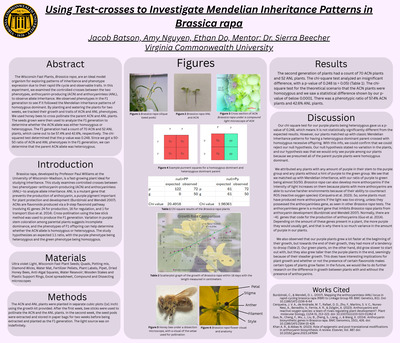
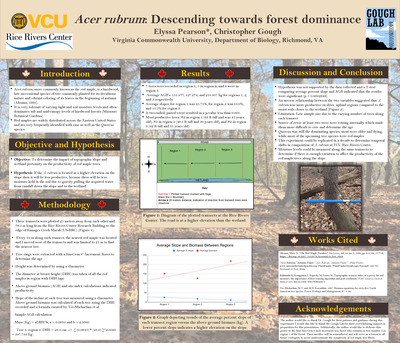
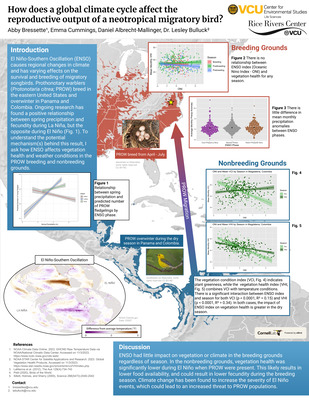
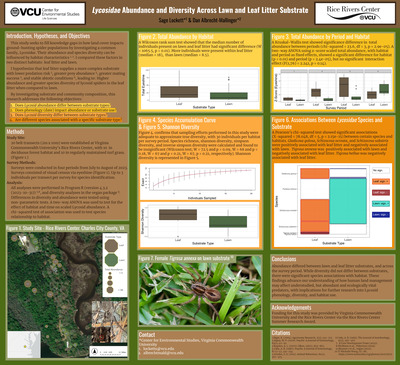
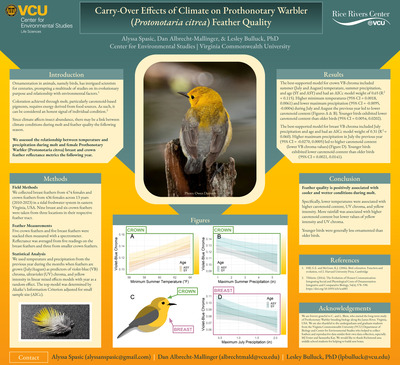
Wetland ecosystems are critical habitats for a host of organisms including resident and migratory birds. Forested wetlands (i.e., mangroves) surrounding Panama City, Panama are currently being drained and cleared to allow for commercial development. Restoration or replacement of mangroves (i.e. younger stands) may not be a sufficient surrogate for existing mature stands. Our main objective was to determine if mature mangrove forests provided higher quality habitat to (wintering) birds compared with younger mangroves. To assess this, we compared the following in mature and young mangroves in Panama (1) Prothonotary warbler and Northern waterthrush body condition, our most abundant species, and (2) feather reflectance criteria (specifically, carotenoid content) in prothonotary warblers occupying both types of mangroves. Carotenoid pigments are an honest indicator of the overall health and condition of a bird. By comparing reflectance of the carotenoid-pigmented breast feathers of prothonotary warbler, we are using feather reflectance as a proxy for an individual bird’s condition. After accounting for sex and age differences in our model, breast feathers from prothonotary warblers in mature mangroves had higher carotenoid content than feathers from prothonotary warblers occupying younger mangrove stands. Site occupancy strongly predicted body condition of prothonotary warblers in our study, such that, mature mangroves supported birds in better body condition than younger mangrove sites. Together, these results suggest mature mangroves offer higher quality habitats for migratory songbirds during their overwintering period.
-

Boxed In: The Lack of Creative Thinking in Engineering Students
Rachel Wilbur
The lack of creativity coming from recently graduated engineering students seems to be apparent through my observations of students, standard social stigma, as well as research conducted at the University of Massachusetts, Dartmouth. However, little is known about the reason behind this vastly growing problem. Without a better understanding of the issues, universities will continue to produce engineers lacking innovative abilities and creative motivation. Seven scholarly articles and studies as well as three primary sources were reviewed and analyzed in order to better understand what difficulties universities face within the engineering community. It has come to my realization that not only is the lack-luster curriculum leading to student disengagement, but the professors also have difficulty expressing the value of creativity, as they cannot clearly define what creativity entails in their specific courses and disciplines. Other problems arise when professors who are proficient with the idea of creative teaching are not incorporating it into their classrooms because the courses are material heavy and time-limited. Several solutions such as project-based introductory courses, interdisciplinary study programs, and professor training have been suggested to solve these faults in the engineering curricula. If changes do not begin to occur within the university environment, engineering students may find it difficult to exhibit the main characteristics of a “good” engineer that companies are searching for—becoming an innovator and a thinker.
-
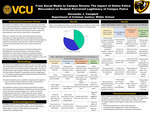
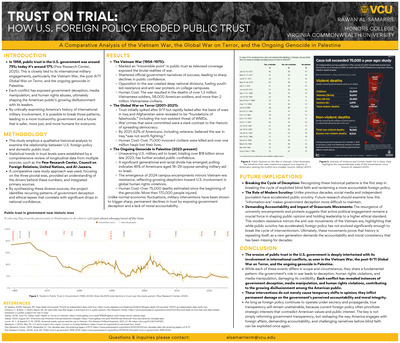
From Social Media to Campus Streets: The Impact of Online Police Misconduct on Student Perceived Legitimacy of Campus Police
Alexander J. Campbell
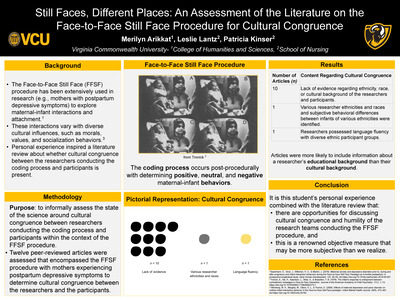
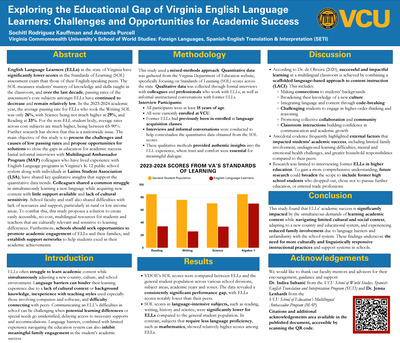
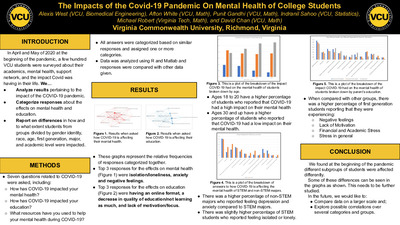
Since 2020, the visibility of police misconduct on social media has increased dramatically. While these specific instances have led to national conversations about law enforcement, little continues to be known specifically about how this online presence shapes college students’ perceptions of their campus police specifically. In this study, we explore how viewing internet-based, and specifically social media content, depicting police misconduct influences university students’ views of campus police. By examining perceived legitimacy of campus police in a university setting, it allows researchers to examine an environment where police serve distinct roles and interact with their constituency in a unique way. This study was conducted at a large urban public university using an online survey that included close-ended and open-ended questions. Using qualitative student data, we identify major themes related to the impact of viewing police misconduct on students’ perceptions of campus police. Preliminary findings indicate that exposure to police misconduct via online content eroded students’ trust in campus police, heightened awareness of racial bias, and increased skepticism of the justice system. Further, student narratives emphasized a weakened willingness to cooperate with campus police. We discuss how these qualitative results compliment or differ with existing quantitative results on student perceptions of campus policing and highlight the need for campus police departments to engage in transparent communication, community-based trust building, and equity-centered policy development.
Poster presentations from the annual Undergraduate Poster Symposium, organized by the Undergraduate Research Opportunities Program (UROP) and part of VCU Research Week.
Printing is not supported at the primary Gallery Thumbnail page. Please first navigate to a specific Image before printing.