



Files
Download Full Text (579 KB)
Abstract
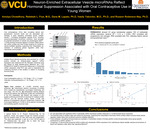
Hormonal contraceptives alter hypothalamic–pituitary–ovarian (HPO) feedback, but their impact on brain-associated molecular communication remains poorly understood. Neuron- enriched extracellular vesicle (nEV) microRNAs (miRNAs), isolated from plasma, provide a minimally invasive window into brain molecular activity. This pilot study examined nEV miRNA expression in young women (ages 18–22) who were either naturally cycling or using a combined monophasic oral contraceptive (OC) pill. To identify hormonally responsive miRNAs, we calculated effect sizes (Cohen’s d) between the two groups and selected those showing large between-group differences (|d| ≥ 0.8). These miRNAs were entered into a principal component analysis (PCA) to reduce dimensionality, and the resulting components were correlated with measured hormone levels (FSH, LH, estradiol, and progesterone) to determine biological relevance. Principal Component 1 (PC1), explaining the largest variance, correlated positively with log- transformed estradiol (r = .64, p = .003) and progesterone (r = .70, p = .001), representing an ovarian steroid axis consistent with endogenous hormonal activity suppressed by OC use. Principal Component 2 (PC2) correlated positively with FSH (r = .59, p = .006) and LH (r = .46, p = .041), reflecting pituitary feedback mechanisms characteristic of exogenous hormone regulation. Scatterplots showed clear group-level separation along these components, highlighting distinct endocrine profiles between OC users and naturally cycling participants. Together, these findings reveal that nEV miRNA expression patterns align with hormonal regulation at multiple levels of the HPO axis—from pituitary gonadotropin signaling to ovarian steroid output. These data suggest that nEV miRNAs provide a molecular window into neuroendocrine adaptations to exogenous hormonal modulation.
Publication Date
2026
Subject Major(s)
Biology and Psychology
Disciplines
Obstetrics and Gynecology
Current Academic Year
Senior
Rights
© The Author(s)