



Files
Download Full Text (4.9 MB)
Abstract
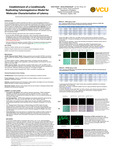
Human cytomegalovirus (HCMV) is a member of the Herpesviridae that establishes life-long latent infections that pose risks of life-threatening disease upon reactivation in immunocompromised individuals. Understanding the molecular mechanisms that govern the latent state is critical for developing effective treatments. However, molecular characterization has been impeded by the scarcity of latently infected cells in vivo and the inability of current in vitro models to support the expansion of clonal latent cell lines. To address these limitations, we developed a novel cell culture model utilizing a conditionally replicating guinea pig cytomegalovirus, a relative of HCMV that mimics HCMV pathology and provides a valuable animal model. We engineered a recombinant guinea pig cytomegalovirus, GP56/52-DD, in which two essential viral replication proteins are fused to a destabilization domain. This genetic modification creates a molecular switch controlled by the synthetic ligand Shield-1. The presence of Shield-1 stabilizes these proteins, permitting normal viral growth, whereas in sister cultures lacking Shield-1, the fusion proteins degrade, preventing lytic replication. Thus, in the absence of Shield-1, GP56/52-DD-infected fibroblasts are forced into a latent state. Preliminary studies demonstrate that infections lacking Shield-1 result in long-term viral persistence without lytic replication. Addition of Shield-1 up to 84 days post-infection triggers reactivation to lytic replication, confirming the establishment of bona fide latency and suggesting that creation of clonal latent cell lines may be feasible. Three specific aims will be undertaken: (i) determine if latently infected cells can be propagated, (ii) establish if latently infected cells can be cloned to produce homogeneous cell lines, and (iii) identify viral proteins that are expressed during latency. Development of a similar latency system based on HCMV is in progress. Such conditionally replicating latency models may provide novel platforms for molecular characterization of latency, potentially revealing new targets for preventing HCMV disease.
Publication Date
2026
Subject Major(s)
Virology
Keywords
Cytomegalovirus
Disciplines
Virus Diseases
Current Academic Year
Freshman
Faculty Advisor/Mentor
Michael A. McVoy
Rights
© The Author(s)