



Files
Download Full Text (4.0 MB)
Abstract
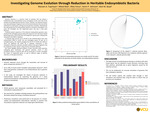
Background: Genome reduction is a common mode of evolution that has played a fundamental role in diversification across all kingdoms of life, and is key to the evolution of heritable bacteria found in insects. However, the reduction process may leave behind gene fragments and non-functional elements that may still be interpreted as intact genes, limiting accurate genome annotation. Motivated by five highly reduced genomes of endosymbiotic bacteria in the genus Enterobacter, this study will investigate the role fragmented genes may play in false gene discovery.
Methods: Predicted protein sequences of five bacterial endosymbiont genomes were clustered into orthologous groups along with sequences from 48 closely-related bacterial genomes. Genes that were not assigned to a group were subsequently compared to the NCBI nr database.
Preliminary Results: A relatively large percent (up to 56.3%) of the predicted genes from each endosymbiont failed to cluster into any orthologous group. Of each set of unassigned genes, the majority (ranging from 85.7% to 97.9%) also failed to return any significant hits within the nr database. Preliminary in silico simulations of genome reduction provided evidence that gene fragments may be recognized as intact “genes” using common annotation pipelines.
Conclusions: My results highlight potential problems of gene discovery within genomes undergoing gene inactivation and genome reduction. Future in silico simulations based on empirical data will be performed to further investigate the impact of fragmented genes, as well as different stages of genome reduction, on false gene discovery
Publication Date
2024
Keywords
endosymbiont, bacteria, Enterobacter, gene discovery, genome reduction
Disciplines
Bioinformatics
Faculty Advisor/Mentor
Bret M. Boyd
Is Part Of
VCU Graduate Research Posters