



Files
Download Full Text (726 KB)
Abstract
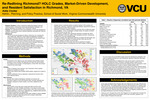
This study investigates the relationship between historical redlining policies, contemporary market-driven community development strategies, and resident satisfaction and quality of life in Richmond, Virginia. The purpose of the study is to understand the limits of using market-driven indicators to create and evaluate community development plans that seek to correct historical inequities created by redlining. To do so, it compares data from redlining maps used by the Home Owners’ Loan Corporation (HOLC) in 1937 to a 2017 real estate Market Value Analysis (MVA) and a 2014 citywide resident satisfaction survey. Results show a significant, moderate correlation between redlining grades and market value grades, but weak correlation between resident satisfaction and MVA and HOLC grades. These findings contribute to the conversation about equitable development in Richmond and beyond by complicating the narrative that formerly redlined areas are necessarily in need of market-driven real estate development to improve resident quality of life. The study also underscores the importance of prioritizing community ownership of development planning processes in historically disinvested neighborhoods.
Publication Date
2023
Keywords
equitable development, community development, city planning, redlining, Richmond Virginia, market value, resident satisfaction
Disciplines
Civic and Community Engagement | Social Work | Urban Studies and Planning
Faculty Advisor/Mentor
Youngmi Kim and M. Alex Wagaman
Is Part Of
VCU Graduate Research Posters
Included in
Civic and Community Engagement Commons, Social Work Commons, Urban Studies and Planning Commons