



Files
Download Full Text (236 KB)
Abstract
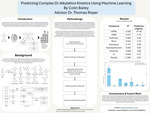
Background: Predicting reaction kinetics for complex chemical systems often presents significant challenges due to intricate reaction pathways, multiple product formations, and competing side reactions. Additionally, the transient nature of reaction intermediates and limited experimental data complicate efforts to capture system dynamics accurately. These complexities necessitate advanced modeling approaches and precise experimental techniques to reliably describe and predict chemical behavior.
Methods: This work investigates the kinetics of di-alkylation of 4-Hydroxybenzoic Acid (4-HBA) using multiple machine learning algorithms, including Random Forest Regression, Gradient Boosting, Lasso, Ridge, and XGBoost. By leveraging reaction conditions, such as temperature, sulfuric acid equivalents, and initial concentrations of reactants, the developed models accurately predict concentrations for various reaction species.
Results: The predictions demonstrate good correlations with experimental results, achieving high accuracy with R² values for some compounds. Hyperparameter optimization was systematically performed using Bayesian optimization methods and validated through Leave-One-Group-Out (LOGO) cross-validation to mitigate the risk of overfitting.
Conclusions: Future work includes changing the scoring method from R² to RMSE, MAE, or a custom scorer to assess if enhanced real-world model prediction performance can be achieved.
Publication Date
2025
Keywords
Machine Learning, Chemical Kinetics, Chemistry
Disciplines
Catalysis and Reaction Engineering | Other Chemical Engineering
Faculty Advisor/Mentor
Thomas Roper
Is Part Of
VCU Graduate Research Posters